

REVIEW.2025.CONSUMPTION.
MOVIES.TV.GAMES.MUSIC.
CONSUME.STAT.
MOVIES
These are the best films I watched in 2025, in order of strength of recommendation. Movies from prior years qualify if I saw them for the first time last year.

Microhabitat (2017)
I know, I know. “My most-recommended film from 2025 is actually this little Korean indie drama from 2017. It’s called Microhabitat? Have you heard of it?” This, from the guy who just wrote a movie list featuring A Knight’s Tale and Sahara (and not the good Sahara (1943))?
Yes, indeed. It’s true. I am…that guy.
[Moment of silence.]
But, listen. I don’t recommend this kind of movie lightly. I know it’s a hard sell. Just do me a favor and keep an open mind while I pitch. Yeah?
Microhabitat—as perfectly summed in the excellent Australian podcast The Last Video Store—is a movie about your 30s. Possibly the movie about your 30s. As a 32 year old, color me biased. Color me vividly biased.
In Microhabitat, Mi-so, a young woman, lives a barebones and, at first glance, depressing life. She cleans homes during the day, pays her bills with her meager wages, and spends the remainder on her two great, perhaps only joys: whiskey and cigarettes. When her landlord suddenly raises the rent, she is faced with what seems like a rhetorical ultimatum: give up whiskey and cigarettes to keep her apartment. Instead, Mi-so packs up her rolling suitcase, heads out into the Korean winter and embarks on a couchsurfing trip down memory lane, rooming night by night, one by one with her old college friends and former bandmates, all of whom have taken disparate, altogether more traditional trajectories through life into their 30s. It is a tour of roads not taken, each well-intentioned friend questioning Mi-so’s decisions while she intently examines their own, asking herself: “Is this really any better?”
The gut-wrenching quality of Microhabitat is its total lack of judgment, which is left entirely to us. At first we (probably) think oh, how irresponsible for Mi-so to choose whiskey and cigarettes, these self-destructive vices, over shelter and security. Then, as we go on to meet her friends, the glamour of responsible maturity—the presumption that there is a “right” way to move through life and that there are correct, “adult” choices we “should” make along the way—vanishes entirely. Everyone has their own struggles, deep, personal, and burdensome, that they have to live with, day-to-day. Mi-so’s relatively simple life, with a simple problem and simple pleasures, actually begins to look quite attractive in comparison to her friends’ more complicated situations: nasty in-laws, absent husbands, helicopter parents, recent divorce. But Microhabitat does not do the easy thing—because it doesn’t explicitly say Mi-so’s way is right, either. It becomes clear that we find comfort with Mi-so not because her circumstances are simple; but because she recognizes and accepts the outcome of the choices she makes, as irrational as those choices may seem to her friends; and to us. Because she understands herself, and what she wants, and questions that as is only natural—but ultimately does not waver.
Microhabitat fully captures the weighty crossroads of adulthood, of the ever-weightier, ever-present questions: “What do I do with my life?” What are the few essential things, between the compounding necessities of work and hygiene and life maintenance, between all the have-tos, that I really care about? What do I want to chase?
Microhabitat’s answers to those questions are, for an existential and contemplative film, reassuring. Not in a schadenfreude sense, in seeing the shared misery of the human condition regardless of wealth or position; one thing it’s definitely not saying is, “We’re all fucked no matter what choices we make.” But it distills the complicated-feeling crossroads of adulthood to choices and consequences. Paths and destinations. It’s only natural to question the decisions that you’ve made, and will make throughout life, particularly in your 30s, where it seems the promise of your youth should, by now, be realized, right? When you seem to be surrounded by people who appear to have fulfilled their promise, who took the “right” paths to safety, security, happiness, wealth, etc. But if Microhabitat is saying any path is “right,” it’s the path that’s right for you, right now. It’s saying that “right” only really means that you understand what you’ll have to give up to get to the destination of your path; and choose that path anyway. More hopefully, it says that every destination is itself, also another crossroads.
I should clarify, Microhabitat is not some grave trodge through existential philosophy—it is often a very funny, borderline slapstick movie smattered with powerful, earnest scenes and honest conversations. There are two entire subplots with a boyfriend and an employer that I haven’t mentioned, both also hilarious and heartfelt. It is at turns sweet, devastating, and uplifting. I (clearly) haven’t stopped thinking about it since.
You can watch Microhabitat with English subtitles here (legally!) on YouTube.
28 Years Later (2025)
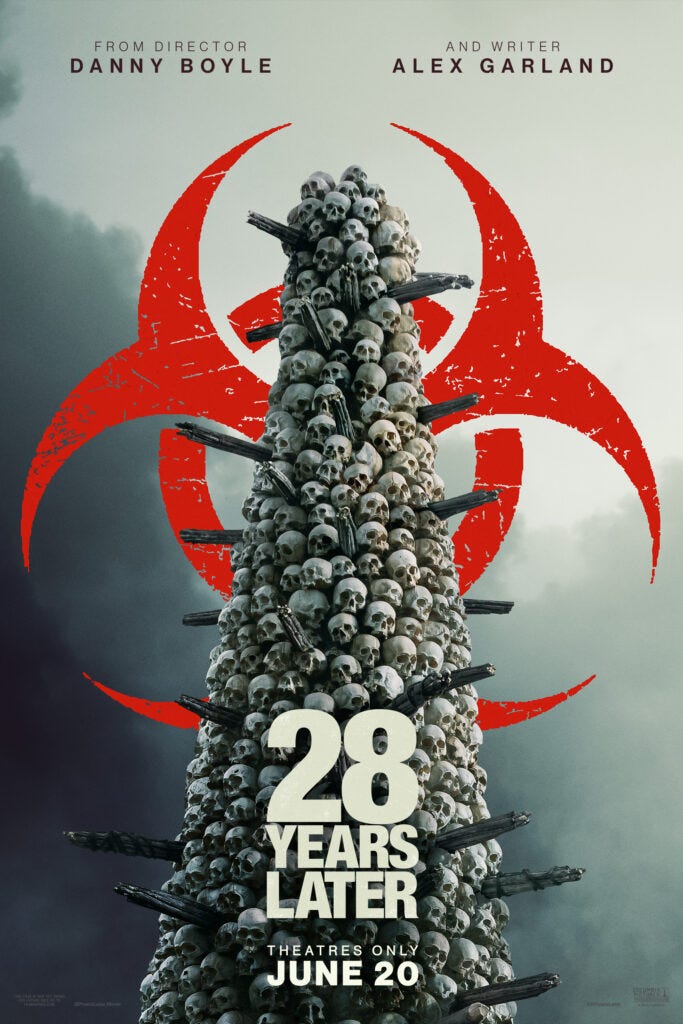
Not scary enough for horror aficionados, too scary for scaredy-cats, at turns soul-crushing and knee-slapping and gross, and also bizarrely filmed entirely on iPhone (heavily modified iPhones, but), 28 Years Later defies categorization and description. It is a zombie movie…about family, love, and loss…and recognizing humanity…and coming-of-age…and the identity of the British people. It is the only film I saw last year to bring me fully to tears.
28 Years Later takes place [redundant] years after the Rage virus contaminated the mainland of the UK, as seen in previous films 28 Days Later and 28 Weeks Later (The two prequels, good on their own merits but not necessary viewing prior to 28 Years, have their shortcomings: 28 Weeks is fairly color-by-numbers zombie stuff, and 28 Days, as aptly described by the Blank Check podcast, now looks like it was the first movie ever filmed on potato). The British and Irish isles have been quarantined to contain the virus, sealing away an unfortunate pocket of humanity from the rest of the modern world. Civilization there has not only stalled but reverted to nearly medieval standards. The “zombies” have evolved in grotesque and terrifying ways. Through this world we follow one little family. A father shows his son the ropes of manhood. A son takes his myseriously ill mother on a dangerous journey to a doctor in the wilderness. The doctor lives in a self-constructed Bone Temple.
To adequately explain the unexpected soulfulness of 28 Years Later would be to spoil its extraordinary effect. Suffice to say it is a moving story of determination, love, and acceptance, with plenty of bloody zombie fights and kooky side characters to keep us entertained along the way. Scenes crackle with style and technical choices that not only grip and electrify the viewer, but shout its themes of identity and immortality with a bullhorn. It is more full of an energy and purpose in storytelling than I’ve seen in a long time (granted, since then I’ve also seen Sinners and One Battle After Another). It is the most surprising film I saw last year.
Sinners (2025)
Rules.
RULES.
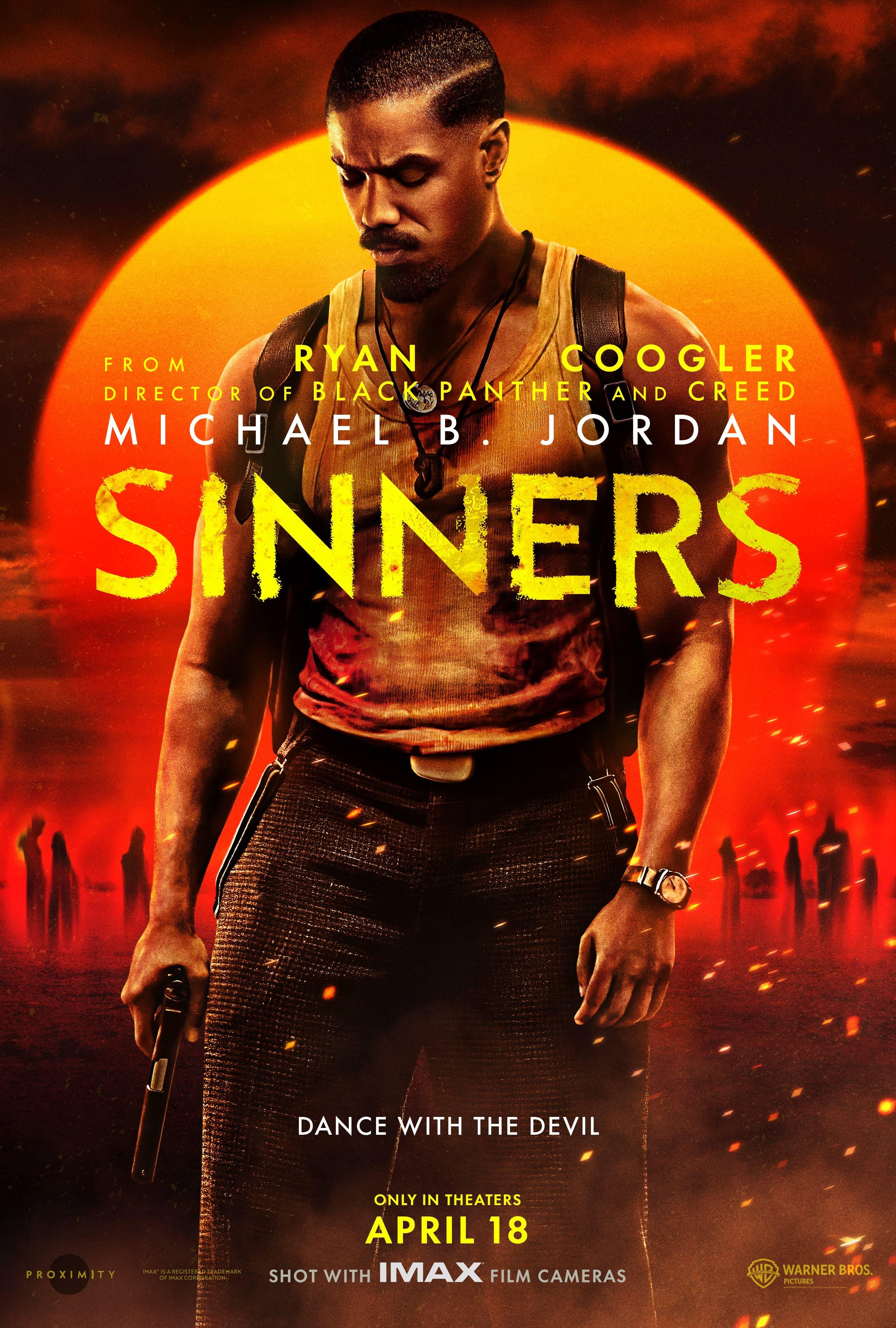
There is a right way to see Sinners: it’s on IMAX or Dolby. The biggest possible screen with the biggest possible sound (and heads up, it’s returning to those screens this Oscar season!). It deserves an overwhelming experience without the minutest distraction. Everything about Sinners is big: its stars, its performances, its effects, its narrative, its genre, its message; every swing is for the fences. Some of those swings, on first watch, miss. Later, on recall, on further viewings, even those misses are reframed into hits—or at least such great efforts you just have to admire the attempt. Sinners contains one of the single greatest scenes in cinema, and is, by a hair, the most movie I saw last year.
Black Bag (2025)
Oh, it’s good to have Soderbergh suspense back on the big screen.
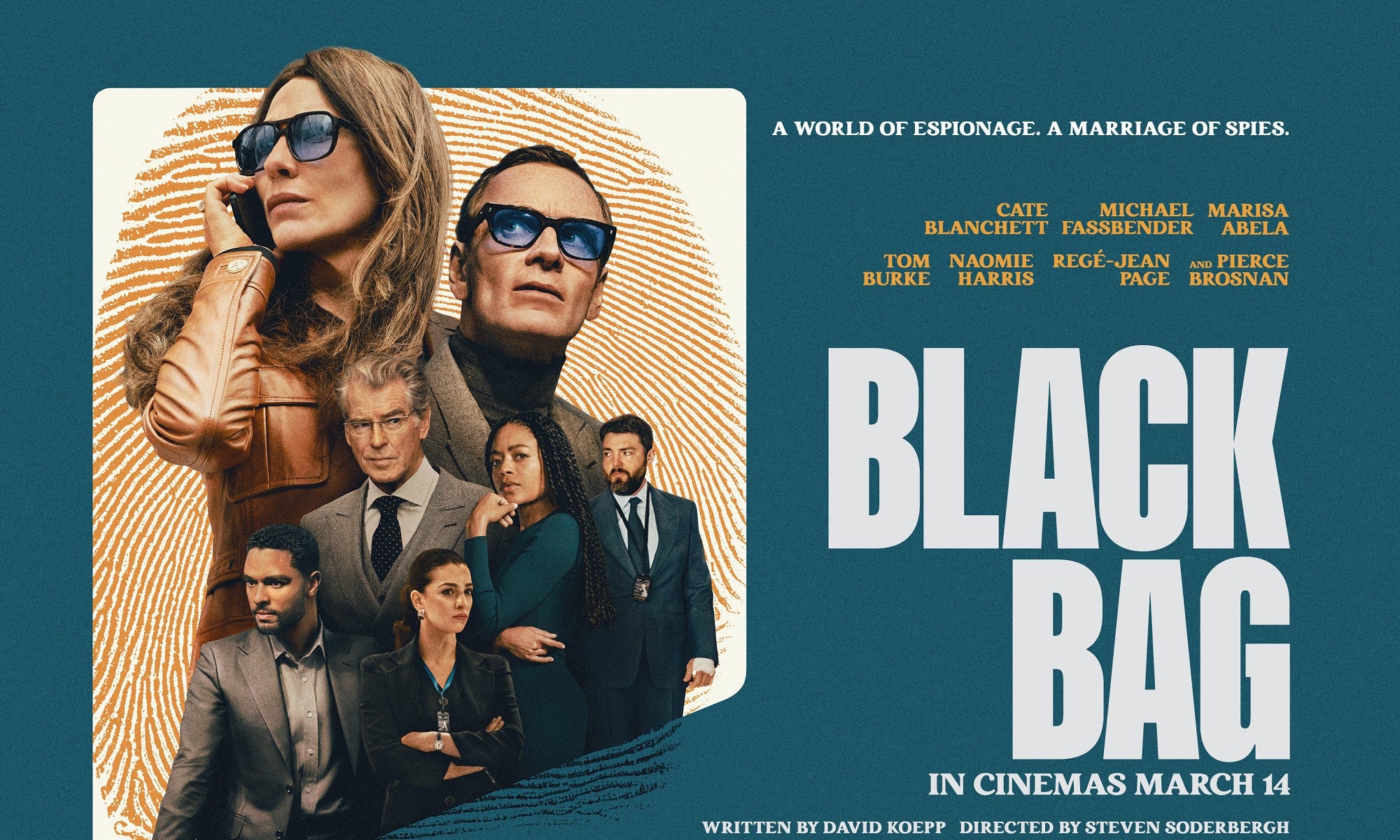
Black Bag is a slick, discomfiting film. In it, cyberintelligence operative Michael Fassbender is tasked with rooting out a mole in his division. He is given a list of suspects: among them is his wife. He invites everyone over to dinner. A series of subtle, sensual, lethal games ensue.
Black Bag discomforts through taut atmosphere and impenetrable language. Characters purposely speak in a dense technical spy jargon that, initially, makes it difficult and even frustrating to parse precisely what’s happening. But what the film does ingeniously is make us, minute by minute, feel ingenious. Plot and language untangle simultaneously, and as we finally begin to understand what the heck these intense and very well-dressed people (Blanchett in particular is somehow walking a runway in every scene) are talking about, we also begin to comprehend the full scope, and stakes, of Fassbender’s hunt. Earlier scenes are rapidly recontextualized as events accelerate into a glorious crescendo of “Aha!” moments.
That is, if you’re paying attention. It is easily the least accessible movie to phone-checkers of the year.
And I should mention Black Bag has quite possibly, in tight running with Sinners and 28 Years Later, the best score of the year; jazzy interludes like a dark Ocean’s Eleven (by the same composer). Plays great on a rainy day in a foreign city, I’ll tell you.
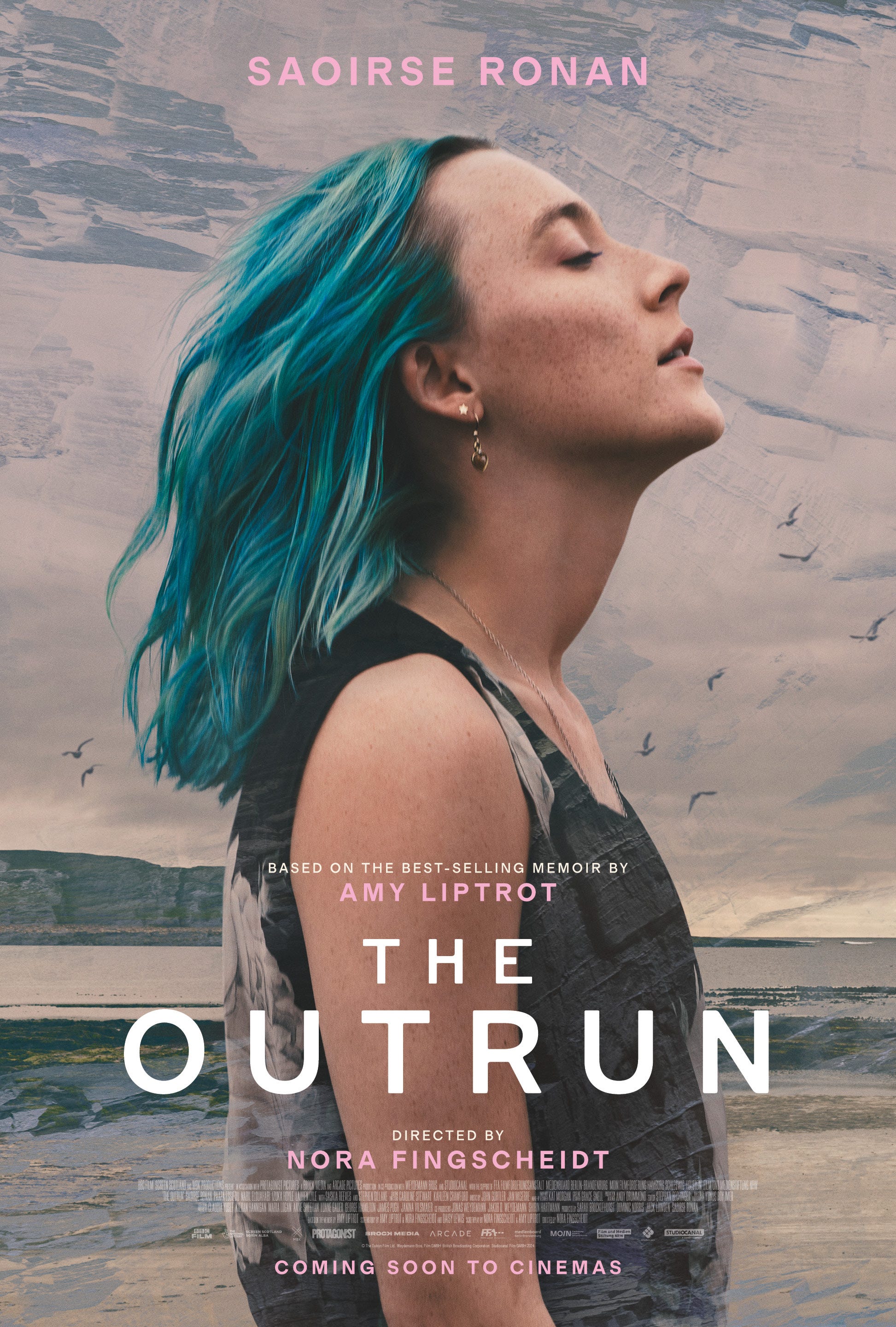
The Outrun (2024)
The Outrun’s effect is such that it singlehandedly took me across the world to witness for myself the harsh, beautiful setting depicted in its unflinching recovery tale. Of course, I didn’t see any other Outrun tourists or tours while I was there, in Orkney (“…and this beach here’s where Saoirse stood and smoked a cigarette while staring at the sea…eh, one of the ones when she’d finally begun pulling it together but not quite got it together, in the middle, aye.”), but I doubt I was the first or will be the last to be lured by its remote, rugged grandeur. There’s no better place to get what my cousin Rory would call a “head shower.”
In The Outrun, Saoirse Ronan plays a young woman trapped in a vice of violent alcoholism and depression, who returns home from London to her relatively quaint islands of Orkney, off in the cold, blustery Atlantic north of Scotland. There she embarks on the long road of pulling the frayed mess of her life together, and discovering what she’ll make from its tattered ends.
As a film The Outrun is a hard start leading to a brilliant finish. It doesn’t shy from the painful consequences of addiction and alcoholism, and holds steady through multiple gut-twisting scenes of brutal outbursts and emotional fallout. But well beyond the suffering it is dedicated throughout to the journey of recovery, as nonlinear for every person as the narrative itself, told across multiple time periods and flashbacks. There are as many moments of love and kindness as of frustration and fury, of gentle understanding as of harsh rebuke, of breathtaking beauty as of despair. It is gorgeously filmed and thunderously scored, appropriately capturing the quiet, harsh Orkneys, rocky dichotomies of quaint farmland and crashing storms as they are. Watch it, and try not to be drawn to that far corner of the world, and not have that deep well of empathy restored for all broken travelers of long roads.
You can read more about my trip to Orkney in the “Gist of Orkney” series.
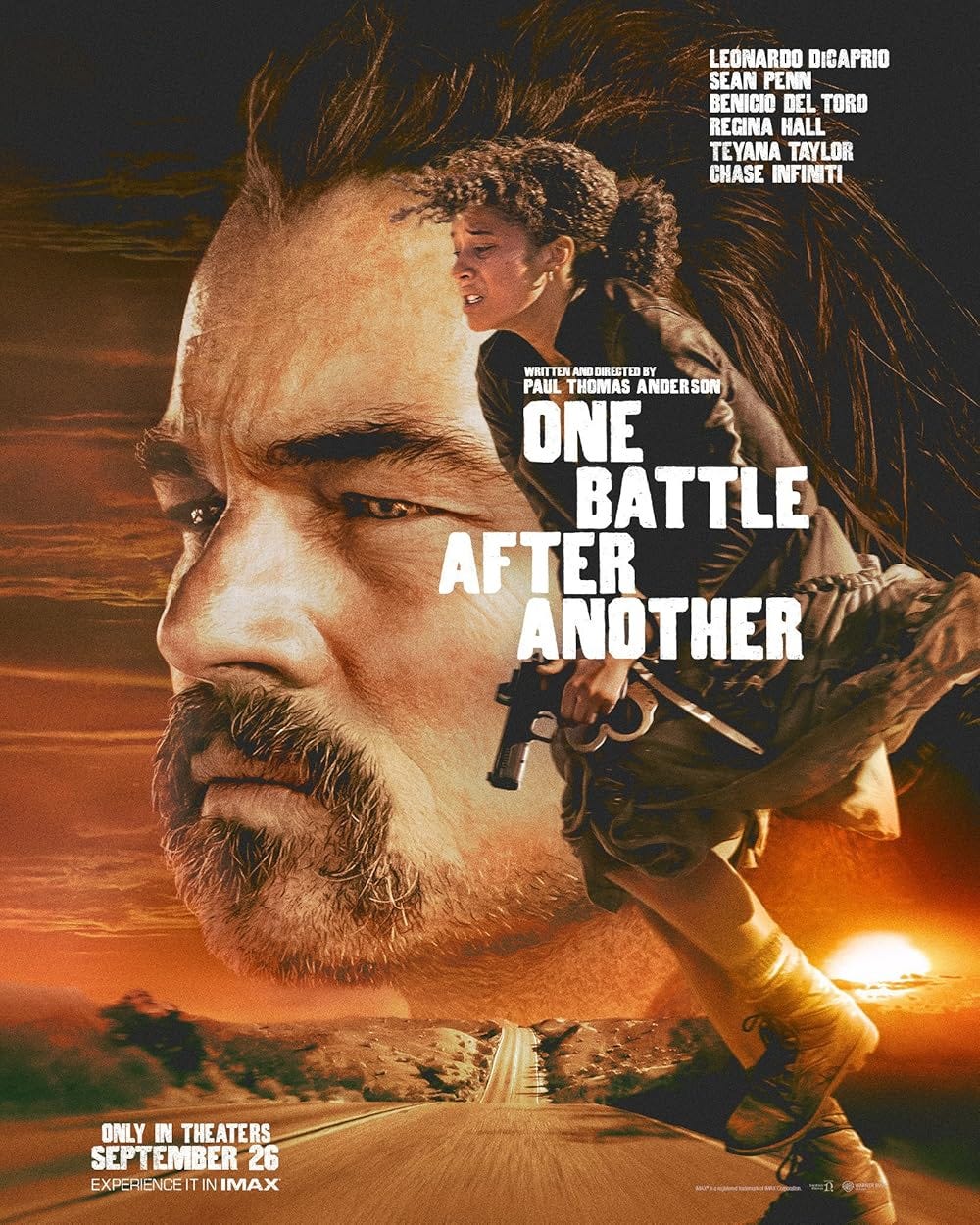
One Battle After Another (2025)
I’m not much of a PTA (Paul Thomas Anderson) fan. It’s not that I don’t like the movies I’ve seen (rather, the movie I’ve seen, only There Will Be Blood…once), but over the years as I’ve watched a trailer or read a synopsis for one of his films, they just don’t interest me at all. That’s a little strange, because the math should add up to Me+PTA=<3. I’m generally a fan of oddball drama-comedies, and I like directors that utilize hyperspecific settings, as Anderson does with LA’s sprawling Valley. Instead, so far the math has always summed up to Me+PTA=¯\_(ツ)_/¯.
That said, One Battle After Another is undeniable. Breathtakingly propulsive, it launches from the gate and, every once in a while, takes its leaden foot just a hair off the gas to scatter a handful of jokes and heartfelt moments into the air, then, while, you’re distracted, it grabs the front of your shirt and launches again into the next intense setpiece. It is present and prescient, fun and funny, affecting in its performances (everyone is tremendous, but Benicio del Toro is magical), and such an obvious masterclass in filmmaking that even I can appreciate the choices made, moment to moment, to make this ride as spectacular and as potent as possible.
I won’t delve into the plot because it’s unnecessary. It is, by a hair, the second-most movie I saw last year.
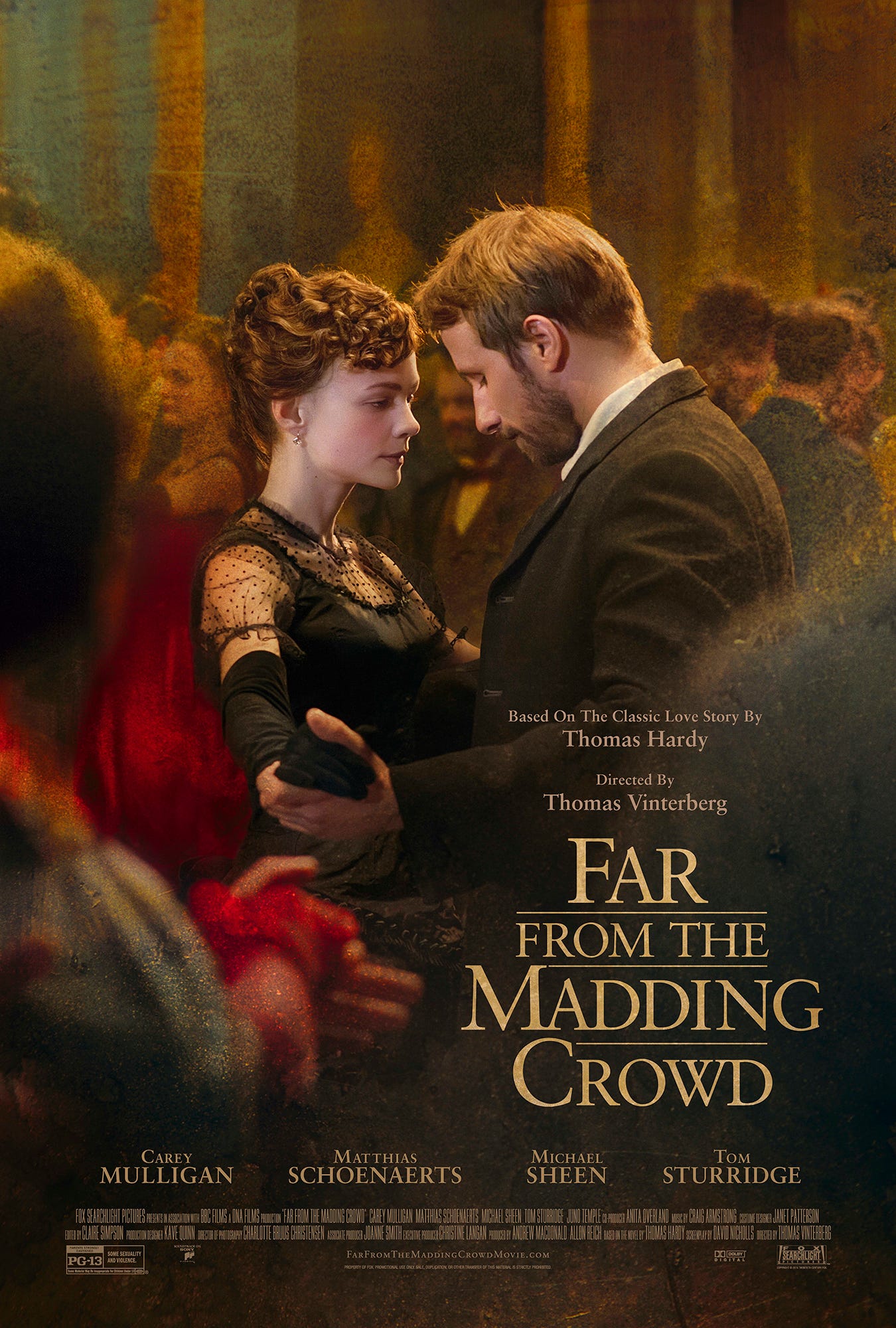
Far From the Madding Crowd (2015)
I went on a run of British nobility romances in the fall, refreshing my Austens (Pride & Prejudice, Sense & Sensibility, Emma) and exploring new favorites like Far From the Madding Crowd and Northanger Abbey. This is the most self-serious of them, but also the most scintillating, a barely-restrained tale of Goldilocks and the Three Suitors that pits a magnetic Carey Mulligan against a selection of broody potential husbands-to-be. There’s plenty of too-close talking, dashing through the rain, prolonged gazing; and though there’s clearly a “juuust right” bowl of porridge for our heroine, it is by no means clear if circumstances will ever let her taste it.
It made me quietly gasp more than any other film last year.
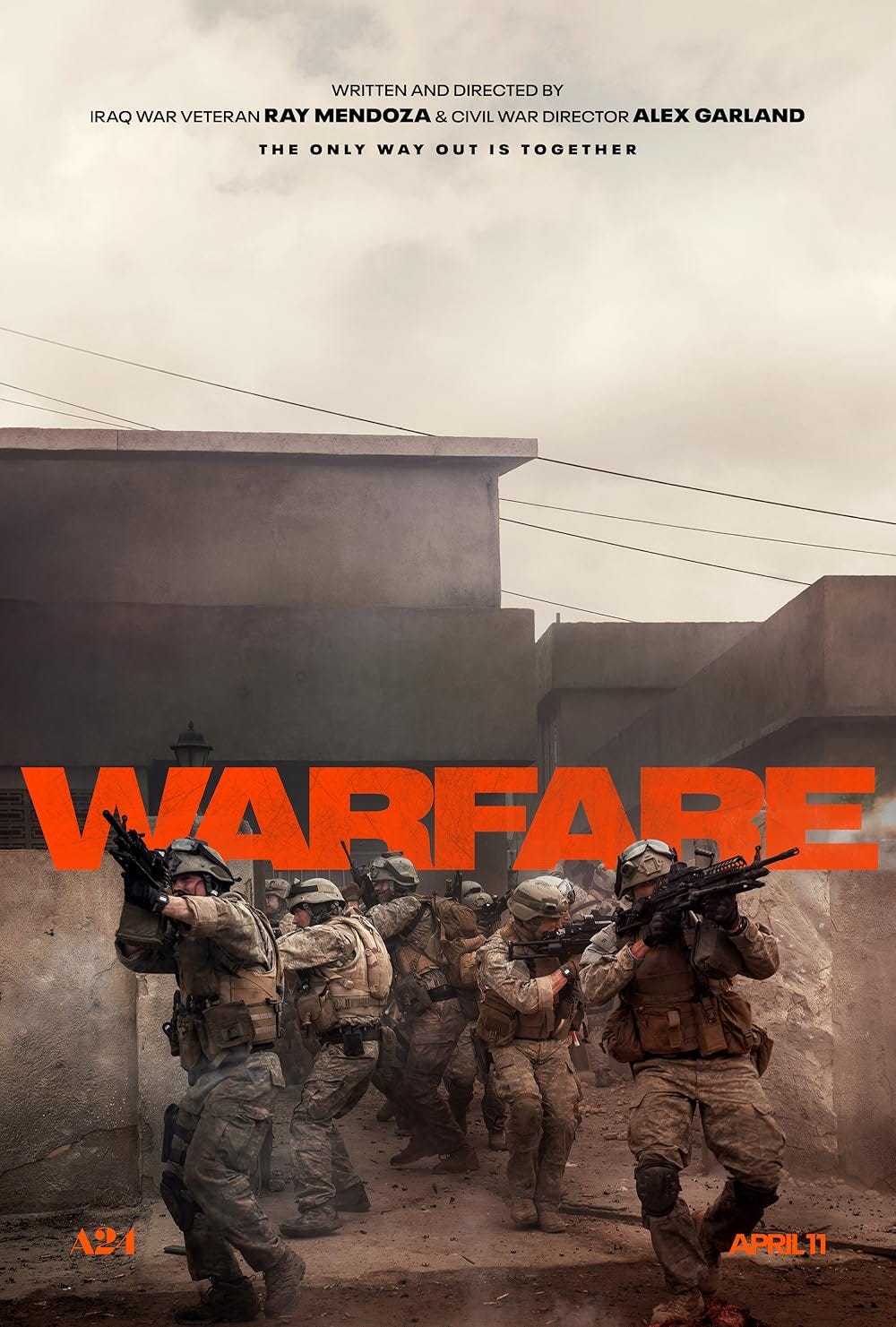
Warfare (2025)
Listen. I try hard to resist the stereotypical masculine urge to watch gritty war movies. I do! Alas, The Hurt Locker gets an annual viewing, sometimes two, and Band of Brothers returns to my screen every winter, and every few years I check back in on Zero Dark Thirty, which somehow always has more nuanced thoughts to communicate than I remember. Though Warfare won’t make the annual list, it might make the every-few-years list. Intense, well-performed, and human; it’s an honest, unsensationalized depiction of modern warfare that we are rarely allowed to see.
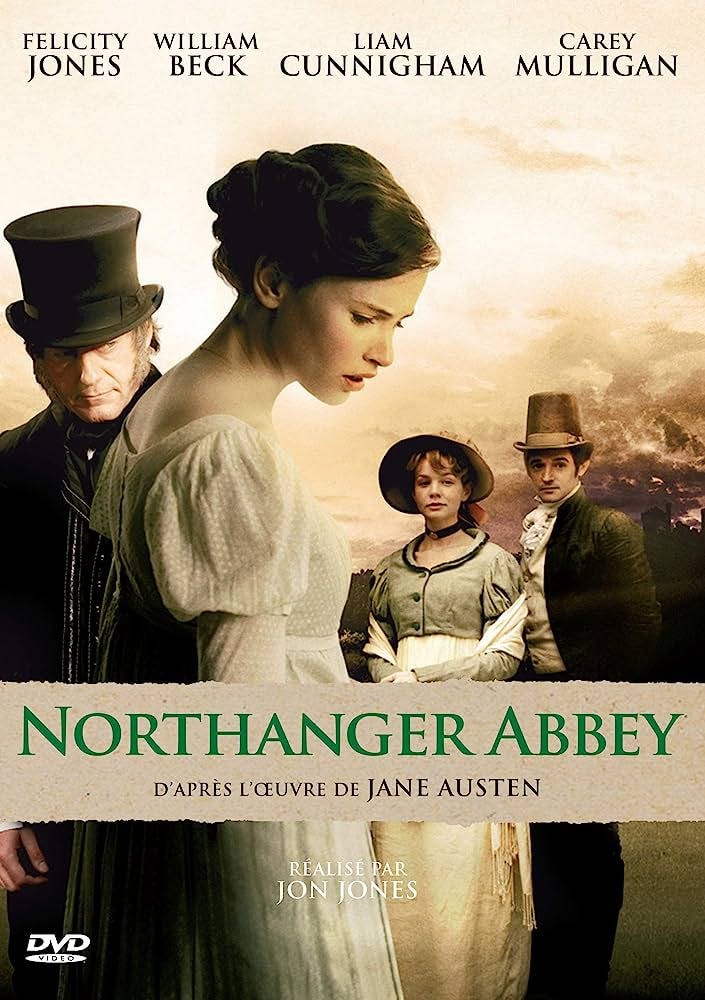
Northanger Abbey (2007)
A late-Austen romance featuring a self-aware heroine and a haunted mansion? Starring Rogue One’s Felicity Jones and Far From the Madding Crowd’s Carey Mulligan alongside a who’s who of British character actors character acting up a veritable character storm? I’m positively sat!
If you enjoy a good Victorian romance, Northanger Abbey is a refreshing delight. It breezes through the standard genre plot developments and twists the formula in giddy ways—even hinting at elements of the dark and supernatural. It also serves as something of a gentle rebuke to Austen fans; to not expect love to play exactly as it does in the books.
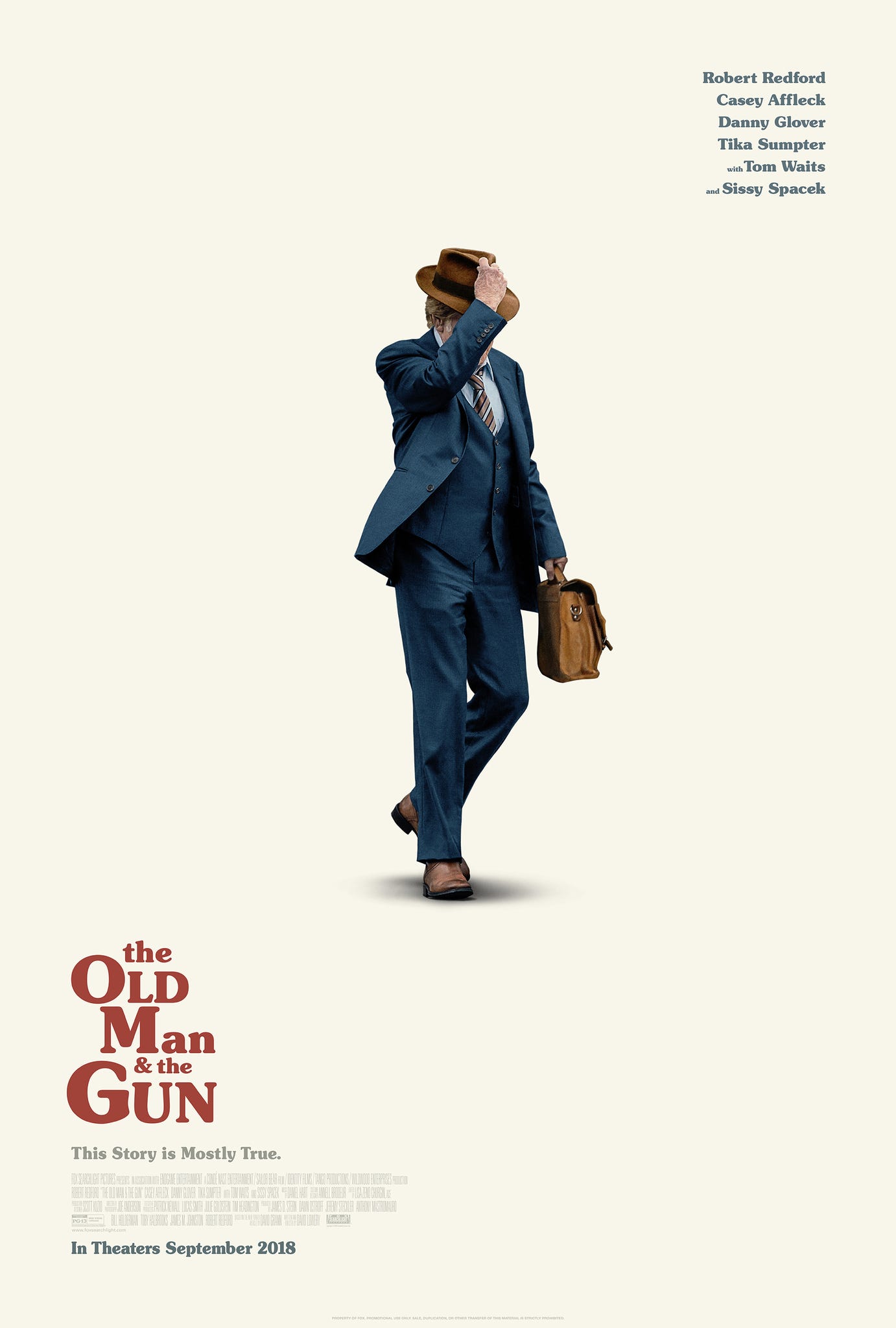
The Old Man and The Gun (2018)
The Old Man and The Gun is a fitting epilogue to the cinematic career of Robert Redford. Loosely based on a true story about a crew of elderly bank robbers, Redford leads a group of fellow gritty old fellas (Tom Waits, Danny Glover) through a series of “last jobs” that confound Casey Affleck’s exasperated detective in both their flawless execution and charming gentility. Of course, Redford falls for Sissy Spacek along the way, and begins to revisit the many choices that led him to this late, fraught point in life. It’s a film intrigued by the messy inner grey area where the aspects of our nature we can’t change and the aspects of our nature we refuse to change confusingly intermix. It is humble, moving, and transcendent; and boasts the best use of Redford’s trademark glinting gaze since All the President’s Men.
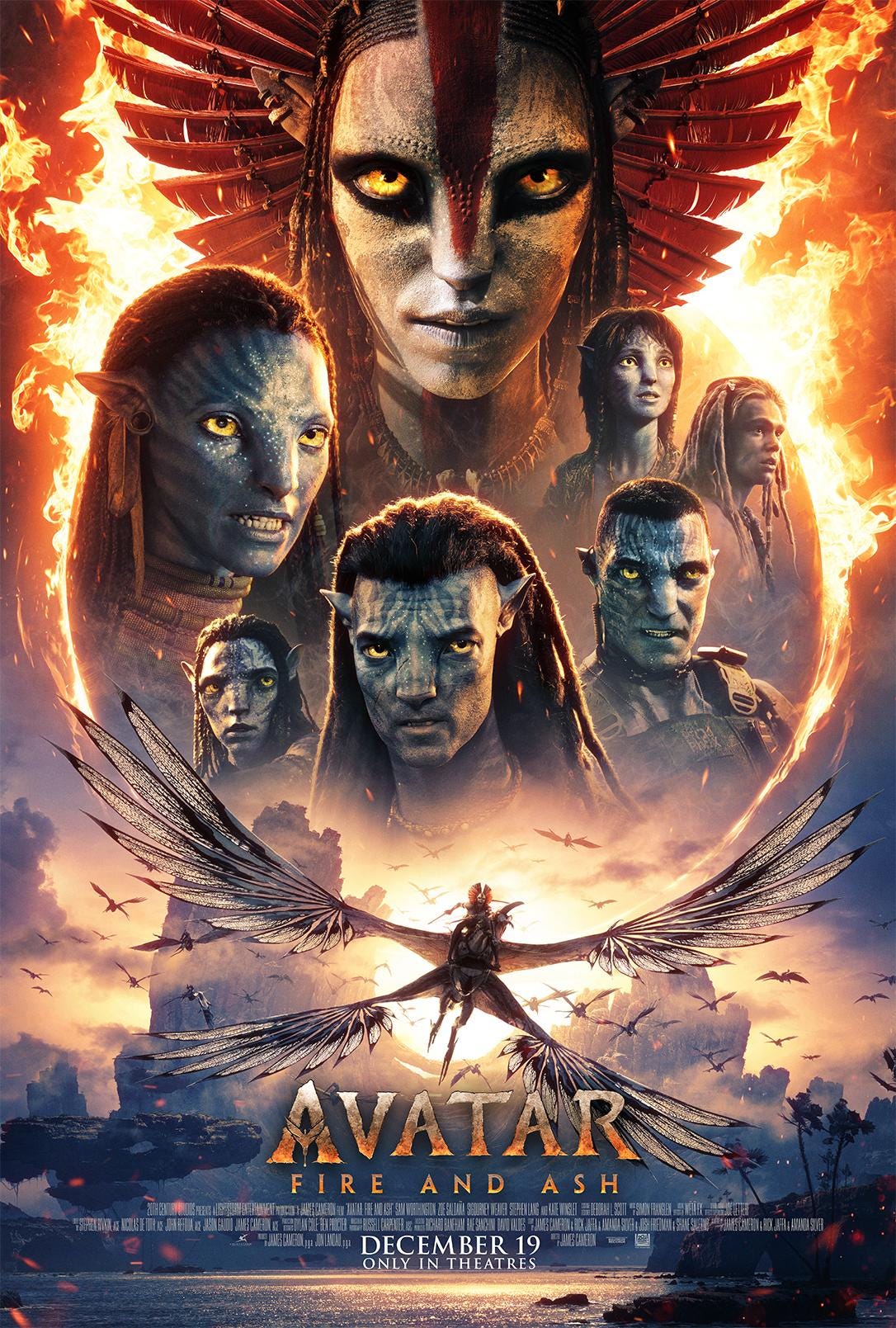
Avatar: Fire and Ash (2025)
Avatar: Fire and Ash, Avatar: Ecstasy and Frustration (nice!). I continue to have an extreme mixed relationship with the Avatar franchise. There are performances that still astound me (Zoe Saldana’s Netiri, Stephen Lange’s Quaritch), performances that are new and exciting (Oona Chaplin’s Varang, David Thewlis’s too-brief Peylak), and performances that bewilder me to the point of exasperation (Sam Worthington’s Jake Sully, Jack Champion’s Spider). The action sequences are the most spectacular cinema rendered in CG since the last Avatar; Cameron has a craftsman’s awareness of digital rendering that actually realizes the technology’s potential rather than turning everything into a sludgy splashy slugfest. Then again, overfamiliar family drama beats feel tedious and rote, becoming borderline torturous in a three-plus-hour film. There’s also about 500% too much use of the word “bro” and 200% too much “babygirl”—not a note I expected to have, but when I found myself actively groaning in the theater, it was going in the review. All in all, though, I was more than happy to see another of these epic adventures in theaters, and hope to see several more.
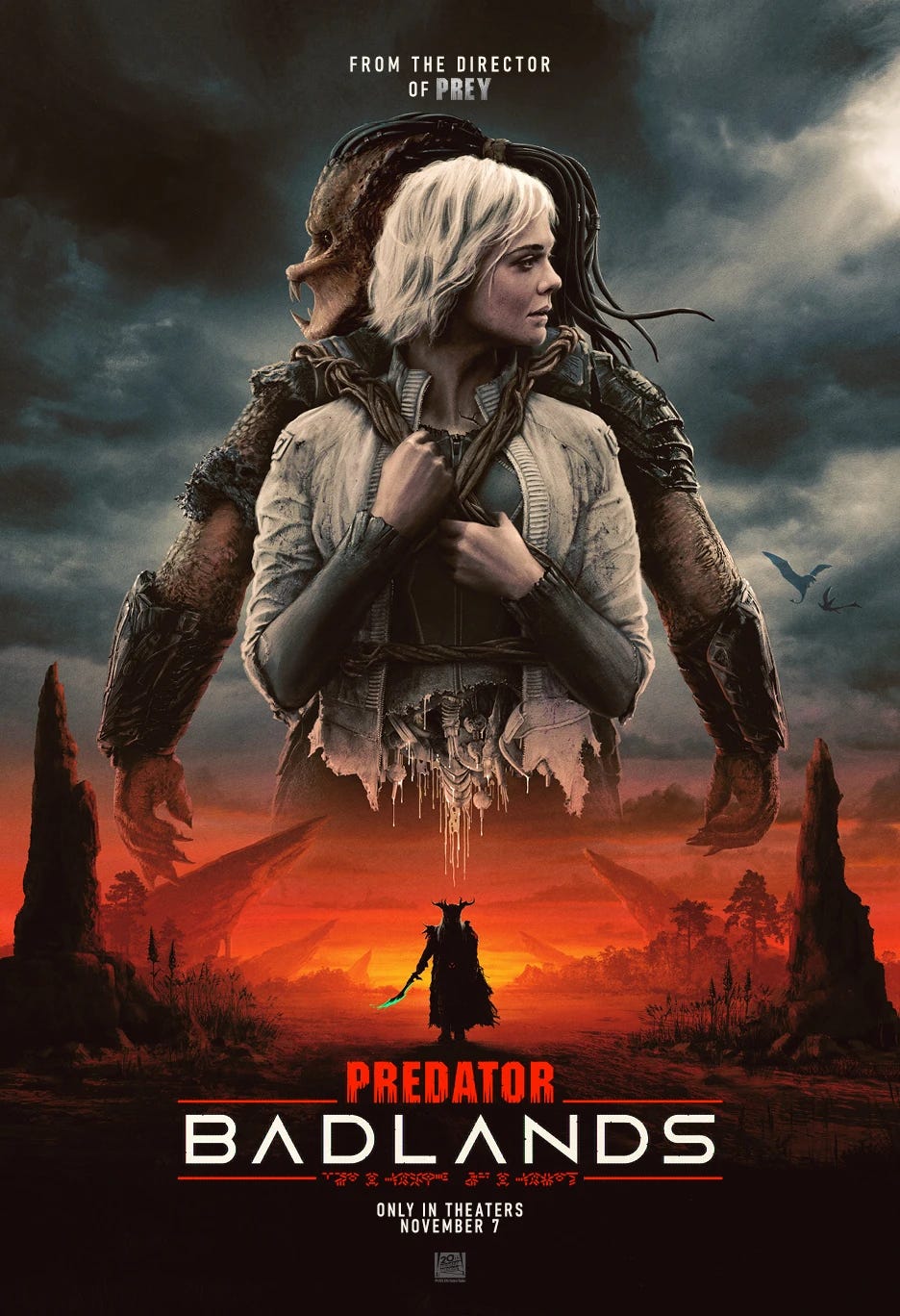
Predator Badlands (2025)
Surprisingly family-friendly times at the movies with the Predator! The other stuff I like about this movie is spoilerific. Good movie!
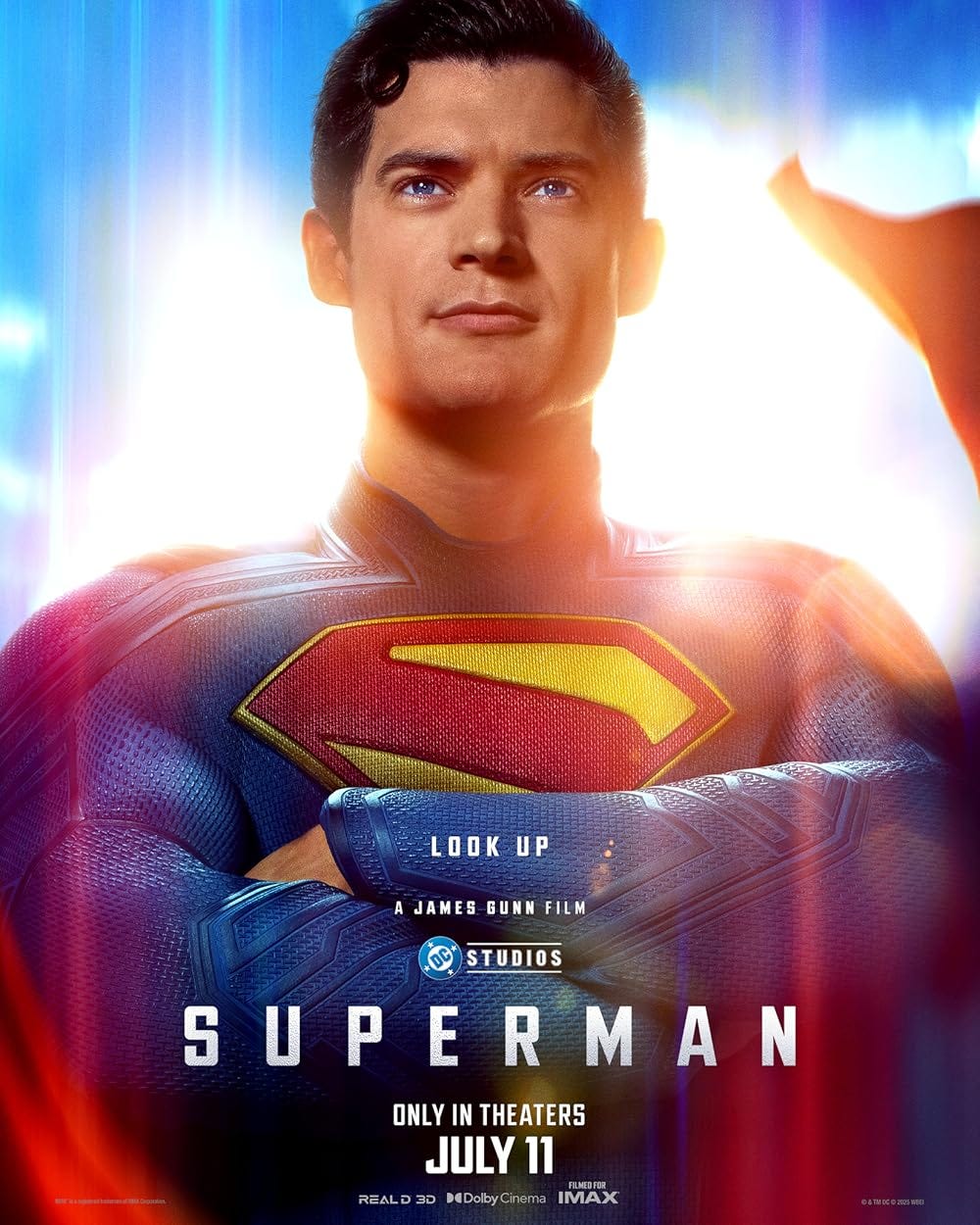
Superman (2025)
Superman is back from a not so long break from theaters, and this time he’s fighting cynicism, remembering his sense of humor, and getting his kisses! According to Marvel, superheroes don’t kiss except for Whatsisname and Whatsername in The Eternals, so a new kissing cape was exciting. I just…never got the chills. And that’s just the slightest bit disappointing for a Superman movie.
TV
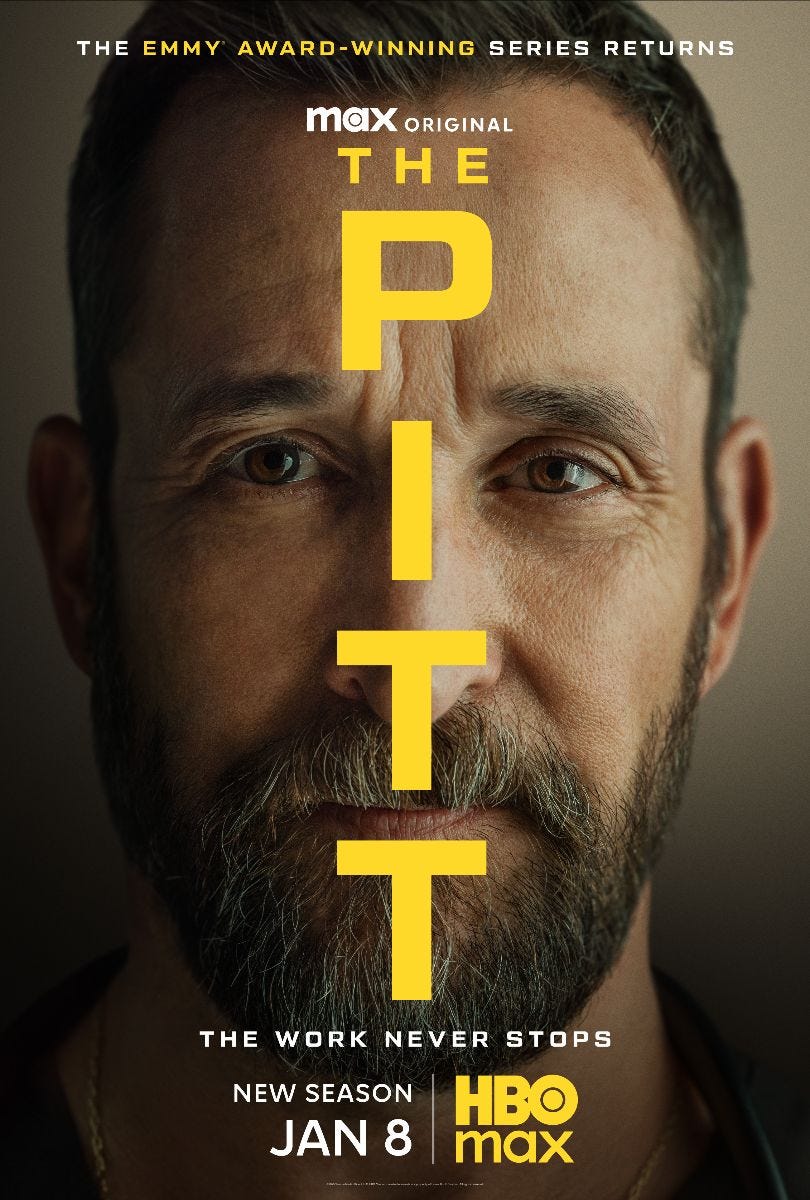
The Pitt (2025)
I’ve already watched The Pitt twice.
The Pitt—which follows the day shift of an emergency trauma center hour-by-hour, 24 style—is an exercise in hope. It’s a depiction of what we pray emergency medical care is like, especially who we hope to be treated by, if we ever find ourselves in need. That said, it’s not all rainbows and unicorns. This trauma center is called The Pit(t) for a reason.
The Pitt’s foundation of hope is established in the many fantastic performances across 15 episodes (of Season 1). The core cast are rich personalities we immediately want to know as much about as possible, and as we’re drip-fed backstory we are in the meantime charmed by them, their expertise and their antics, from the fresh-faced med students to the confident residents to the grizzled attendings to the capable, snarky nurses that are the obvious backbone of the operation (heh!). They handle everything that comes through their doors, regardless how messy or strange or dangerous, with dedicated if flawed humanity (and a healthy dose of blunt crassness). There are A, B, C, D and sometimes E plots per episode, some lasting just that single hour and others carrying several episodes, and still others crossing the entire season. There’s so much happening! Just like in a busy emergency room! It’s almost like…everyone’s a story (🤯)? And, while occasionally these plot developments get a little silly, or dark or dramatic, they feel grounded in at least what we imagine an emergency room could deal with on a daily basis: all the menagerie of wounded humanity funneled into one place.
I’m a sucker for shows about competent people doing things competently. On TV that usually translates to some kind of detective mystery; but I’ll be following The Pitt’s ensemble teamwork drama as long as they make episodes. And when they’re done, I’ll watch them all over again.

K Foodie Meets J Foodie (2025)
This is maybe the most on-brand recommendation I have for 2025. If you know me at all, you know I love food and travel (I should really start a blog!). K Foodie Meets J Foodie is the ultimate way to travel and eat vicariously through your TV. It is the only reality show I watch—and that does make me better than you!
The premise is simple: famous Korean foodie and pop star Si-Kyung and famous Japanese foodie and actor Yutaka Matsushige take each other to their favorite eateries in their home countries, exploring both nostalgic favorites and dishes that exemplify the best of each nation’s regional cuisine. Episodes usually feature only one meal at a time, so we can savor each restaurant and dish (each bite) along with our hosts, learning a little about them and a lot about Japanese and Korean food culture along the way. It’s an extremely cozy watch. No show has ever made me hungrier.
GAMES

Silksong
I didn’t play many games last year—but I made an exception for Hollow Knight: Silksong.
The original Hollow Knight (2017) was a cult hit that developed a near-mythical reputation years after its release (not unearned). It is a difficult exploration and adventure game that follows a little bug guy as he journeys through a mysterious underground world full of secrets and great big bug guys that want to kill/squash/eat/otherwise destroy him. It satisfies in both the combat—simple and tactile, with enemies that constantly challenge in refreshing ways—and exploration, with rewards earned with every victory and treasures discovered in hidden crevices and breakable walls. When the sequel, Silksong, long-awaited and delayed, surprise-released in September, the gaming world went rabid.
I didn’t go rabid though, because I didn’t understand the Hollow Knight games until later. On my recent trip to Scotland, when I was cooking or waiting for weather to pass, I’d put on a playthrough of Silksong by a streamer I follow; the game just looked incredible, especially in the hands of someone who clearly knew what they were doing. So when I got home I finally gave the original a try, and was immediately hooked.
Silksong heightens and enhances the Hollow Knight formula in every way: in storytelling, in combat, in its characters and more than anything in the size and richness of its world. It constantly feels like there are endless places to explore, exciting treasures to find, and fascinating characters to meet. It is also enhanced in difficulty; this is not a game the average person can bulldoze their way through, unfortunately for me. I had to finish short of the game’s “true” ending (there are multiple); it takes nothing away from the result. It is a game that, once you’ve developed the skills to hang with it, makes you feel every inch the hero (bug) you’re playing.
MUSIC
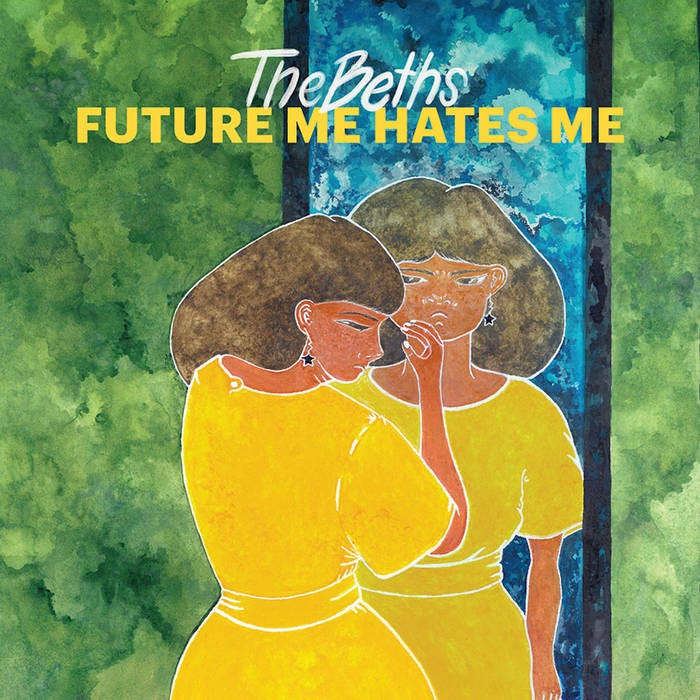
The Beths
A few months ago the Spotify algorithm threw Kiwi indie-rockers The Beths into my Billie Eilish/Chappell Roan-clouded feed, and it was a sound that immediately caught me. “Little Death,” the first track I heard, is an absolutely ripper piece of music (that’s Aussie slang but whatever) about falling hard in love. Since then I’ve had that first album, Future Me Hates Me, on loop between all my podcasts. It featured heavily in my Orkney road playlist for triumphant dramatic drives, and at home is always popped on the second I can see the ocean. Although I’m still developing my affection for their other albums (that’s not a euphemism for not liking them, it’s just difficult for me in this honeymoon period to move beyond Future Me Hates Me), which are all fairly distinct, I appreciate that they are a band that plays the music of their lives, wherever they’re at at the time of making. I can see myself following them for a long time coming.
END.RECOMMENDATIONS.2025.
DIRECTIVE.2026.